
A foundation inspection should answer a practical question: what is happening at this property, how serious is it, and what kind of professional should act next? In La Jolla—where older housing, hillside lots, coastal settings, and mapped seismic hazards often overlap—that question is worth getting right before you authorize repair bids.
La Jolla Structural helps homeowners and buyers request a foundation evaluation and connect with licensed specialists serving the area. We do not perform inspections ourselves, issue “safe house” certificates, or substitute for City of San Diego permit inspections.
Request a Foundation Evaluation
What “foundation inspection” can mean (five different things)
Homeowners use one phrase for several different services. Mixing them up causes bad hiring decisions:
- Pre-purchase / due diligence visual assessment — Often part of a general home inspection. Limited to accessible areas. Useful for spotting red flags. It is not automatically a structural engineering opinion.
- Structural engineering evaluation — A California-licensed civil or structural engineer interprets distress patterns, load paths, and repair concepts, and may produce a stamped letter or report.
- Geotechnical investigation — A geologist or geotechnical engineer uses borings, laboratory testing, and geologic judgment to address bearing, expansion, fill, slope stability, or fault-related questions when required.
- City Building Official / combination inspections — Mandatory checkpoints during permitted construction. These are not a shopping service you hire instead of design professionals.
- Special inspections or construction observation — Code- or permit-driven observations during work. Private engineering observation is not the same as a City inspection.
If someone markets a “certified foundation inspector” title as a substitute for PE/SE/GE practice or for the contractor classifications that apply to repair, slow down and verify what California law actually allows.
Who needs a foundation evaluation in La Jolla
Consider a focused evaluation when you are:
- Buying or selling a home in ZIP 92037 and disclosures, walk-throughs, or a general inspection raise foundation questions
- Seeing cracks, sloping floors, sticking doors, or crawl-space moisture that you cannot explain
- Planning a remodel, addition, or foundation-related repair that may need City permits and stamped documents
- Living on a hillside, canyon-edge, or coastal-adjacent lot where drainage and slopes complicate the picture
- Checking mapped Earthquake Fault Zones or City geologic hazard categories as part of due diligence
La Jolla is a nearly built-out City of San Diego community planning area. Remodel and real-estate activity in that setting often surfaces foundation questions—especially for mid-century homes—but that is context, not a measured “failure rate” for the neighborhood.
Warning signs and qualification criteria
Educational cues that often justify a closer look:
- Stair-step cracks in masonry or patterned cracks in stem walls
- Horizontal cracking where walls retain soil
- Gaps at window and door openings; racked frames
- Floors that slope, bounce, or feel uneven between rooms
- Separations between porches, slabs, or stairs and the main house
- Moisture, decay, or displaced posts in crawl spaces
- Erosion, settlement at grade, or distress near retaining walls
Presence of a crack is not an automatic emergency. Absence of visible cracks is not proof of adequacy. Access also limits what anyone can see: slabs hide more than raised floors; hillside stem-wall heights vary; finishes and landscaping block views. The share of crawl-space homes in 92037 is not published in standard year-built Census tables—so we will not invent one.
Verified La Jolla context for inspections
Housing age
ACS estimates for ZCTA 92037 show roughly 19,700 housing units with a mid-century/older skew and a large 1970s bin. Older stock raises the value of careful evaluation when symptoms appear; it does not mean most homes “fail inspection.”
Seismic and geologic screens
The Rose Canyon Fault Zone extends through La Jolla. Official Alquist-Priolo Earthquake Fault Zone maps for the La Jolla area became effective in 2021. California’s natural hazard disclosure framework also means sellers may need to disclose mapped earthquake fault zones and other listed hazards. Buyers often pair disclosure review with independent evaluation—especially when floors are out of level or cracks look active.
City Seismic Safety Study maps categorize geologic hazards that can trigger geotechnical investigation requirements depending on hazard category and building class. These maps are regional guides, not site-specific reports.
Jurisdiction
Private inspection or engineering reports do not replace required City inspections once a Building Permit is issued. An evaluation that is only “informational” may also be insufficient for permit submittal if the City expects stamped plans and geotech.
What a thorough evaluation may examine
Depending on scope and access, professionals may review:
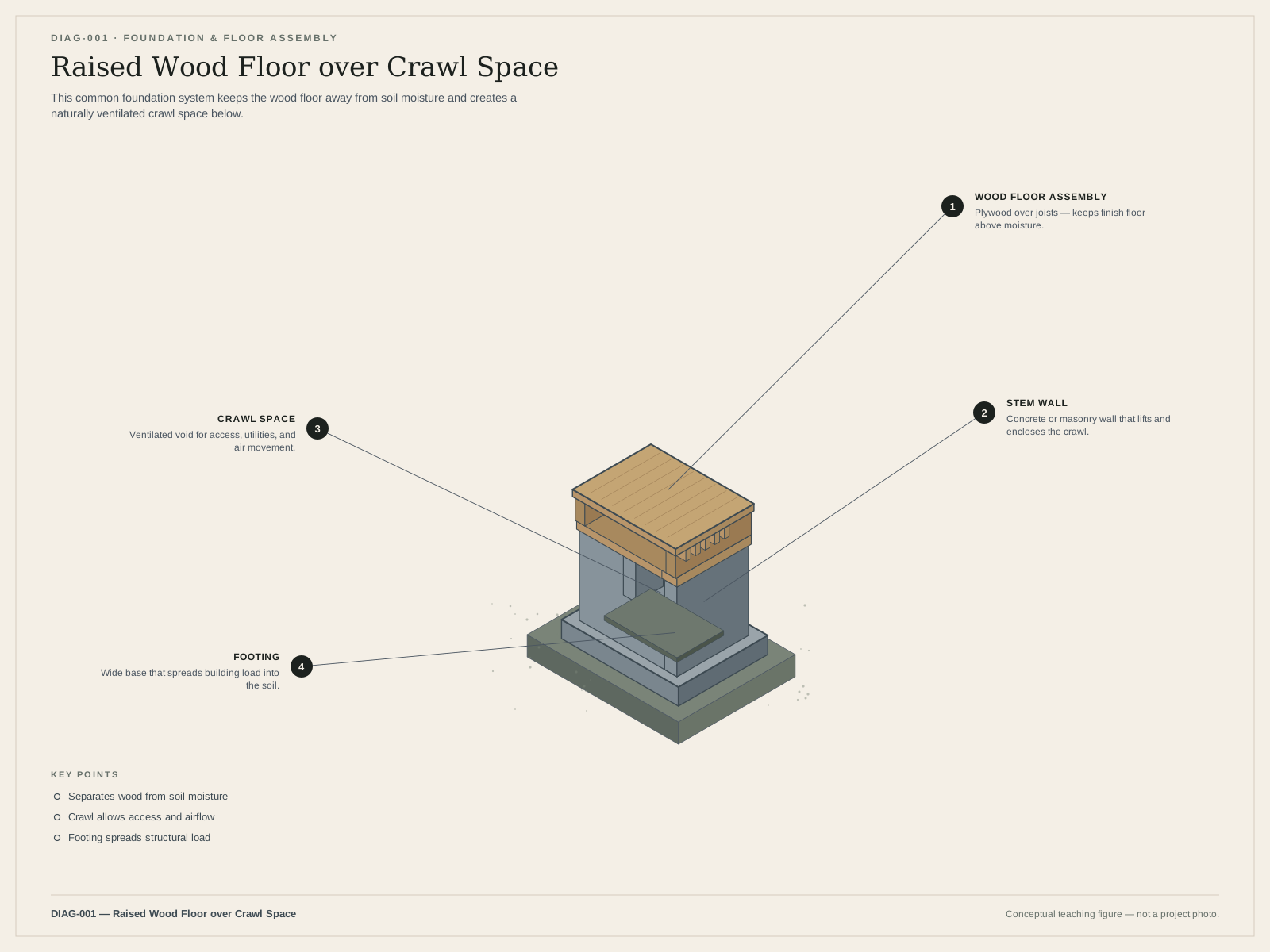
- Foundation type and visible condition (stem walls, footings, slabs, piers, grade beams)
- Crack patterns, widths, offsets, and signs of ongoing movement
- Floor levelness and related interior finishes
- Drainage, grading, irrigation, and moisture entry
- Connections and framing where visible in crawl spaces
- Exterior grades, retaining walls, and slope clues
- Prior permits, disclosures, and any existing reports
- Whether mapped hazards suggest geotech before repair design
For broader structural questions beyond the foundation line, see structural inspection.
How evaluation connects to repair
Inspection is triage, not the finish line:
- Benign shrinkage or finish cracks may need monitoring or limited sealing—see foundation crack repair for how repair differs from diagnosis.
- Movement consistent with settlement may lead to engineered foundation settlement repair after soils and structure are understood.
- Confirmed structural foundation problems typically route through foundation repair with design, permits, and a properly classified contractor.
A report that only says “hire a foundation company” without clarifying cause is incomplete. A bid that skips evaluation is incomplete in the other direction.
Recommended process for La Jolla homeowners
- Write down symptoms and timing — when you first noticed changes; after rain, irrigation, or construction?
- Check public maps — EQ Zapp / official fault-zone maps and City geologic hazard information as homework, not as a DIY geotech report.
- Match the hire to the question — general inspector for broad diligence; structural engineer for distress interpretation; geotechnical engineer when soils or slopes govern.
- Ask about deliverables — photo log, level survey, stamped letter, recommendations suitable for City submittal, or informational only?
- Clarify inaccessible areas — slab interiors, finished basements, steep side yards, neighbor-side walls.
- If repair is recommended — ask who designs, who constructs, who pulls the City of San Diego permit, and whether historic or Coastal Overlay review may apply for older or coastal-adjacent scopes.
Request a Foundation Evaluation
Licensing boundaries that protect you
Unlicensed persons cannot practice civil, structural, or geotechnical engineering or use protected titles. Contractors build; engineers and geologists design and evaluate within their disciplines. City inspectors enforce permitted work. Keep those roles distinct when you read marketing pages.
Buyer, seller, and remodel scenarios
Buying in La Jolla
Pair natural hazard disclosures and any seller-provided reports with your own evaluation plan. Mapped earthquake fault zones and City geologic hazard categories are screening tools. If a general inspector calls out foundation distress—or if the home is hillside, heavily remodeled, or shows sloping floors—budget time for structural and possibly geotechnical follow-up before removing contingencies.
Selling or refinancing
Buyers and lenders increasingly ask clearer questions about cracks and out-of-level floors. A well-scoped evaluation can reduce last-minute renegotiation—provided the report’s limits are honest about access and what was not tested.
Remodel and addition planning
Opening walls, changing loads, or touching foundations often moves you from “curiosity” into City permit territory. Early evaluation helps you learn whether historic review (common for structures 45 years or older), geotech, or Coastal Overlay issues will affect schedule and design. An informational walk-through is not always the document the Building Official will accept for permit submittal.
How to read an inspection or engineering report
Ask for plain-language clarity on:
- Who authored the report and what license authorizes their conclusions
- Which areas were inaccessible or concealed
- Whether movement appears active, dormant, or indeterminate
- Whether recommendations are monitoring, maintenance, engineering design, or construction
- Whether the deliverable is suitable for City submittal, lending, or only private information
- What next professional should be hired if the author is not designing the repair
If two reports disagree, compare scopes before comparing personalities. A visual-only assessment and a geotech investigation are not interchangeable products.
Cost and timing factors (no fixed prices)
Evaluation cost varies with access, lot steepness, need for level survey, laboratory testing, fault or slope studies, and whether stamped design documents are included. Timelines also vary with professional availability and City review when permits follow. This site will not publish invented fee menus or guaranteed appointment windows.
FAQs
Is a home inspection enough before buying in La Jolla?
It is a strong first screen. If the inspector flags foundation, drainage, hillside, or crack patterns—or if disclosures and maps raise concerns—budget for engineering and possibly geotech rather than negotiating only on cosmetic credits.
Will the report say my house is earthquake ready?
A visual walk-through should not be sold as a guarantee that a home is “safe,” “code compliant,” or “earthquake ready.” Seismic performance questions often need engineering scope beyond a basic inspection.
Do I need geotech for every inspection?
No. Geotech becomes more likely when mapped hazard categories, fill, expansive soil, slopes/bluffs, or the Building Official’s requirements enter the picture—especially if repair or new foundation design will follow.
Can LaJollaStructural.com inspect my house?
No. We help you request an evaluation and connect with licensed specialists. We do not perform inspections or stamp reports.
What if the seller already provided a foundation report?
Read the scope date, accessibility limits, author license, and whether recommendations were informational or design-ready. Independent review is often worthwhile on hillside or heavily remodeled properties.
Request a Foundation Evaluation
If you need clarity on cracks, settlement clues, or a pre-purchase foundation question in La Jolla, start with the right evaluation—not the loudest repair pitch.