
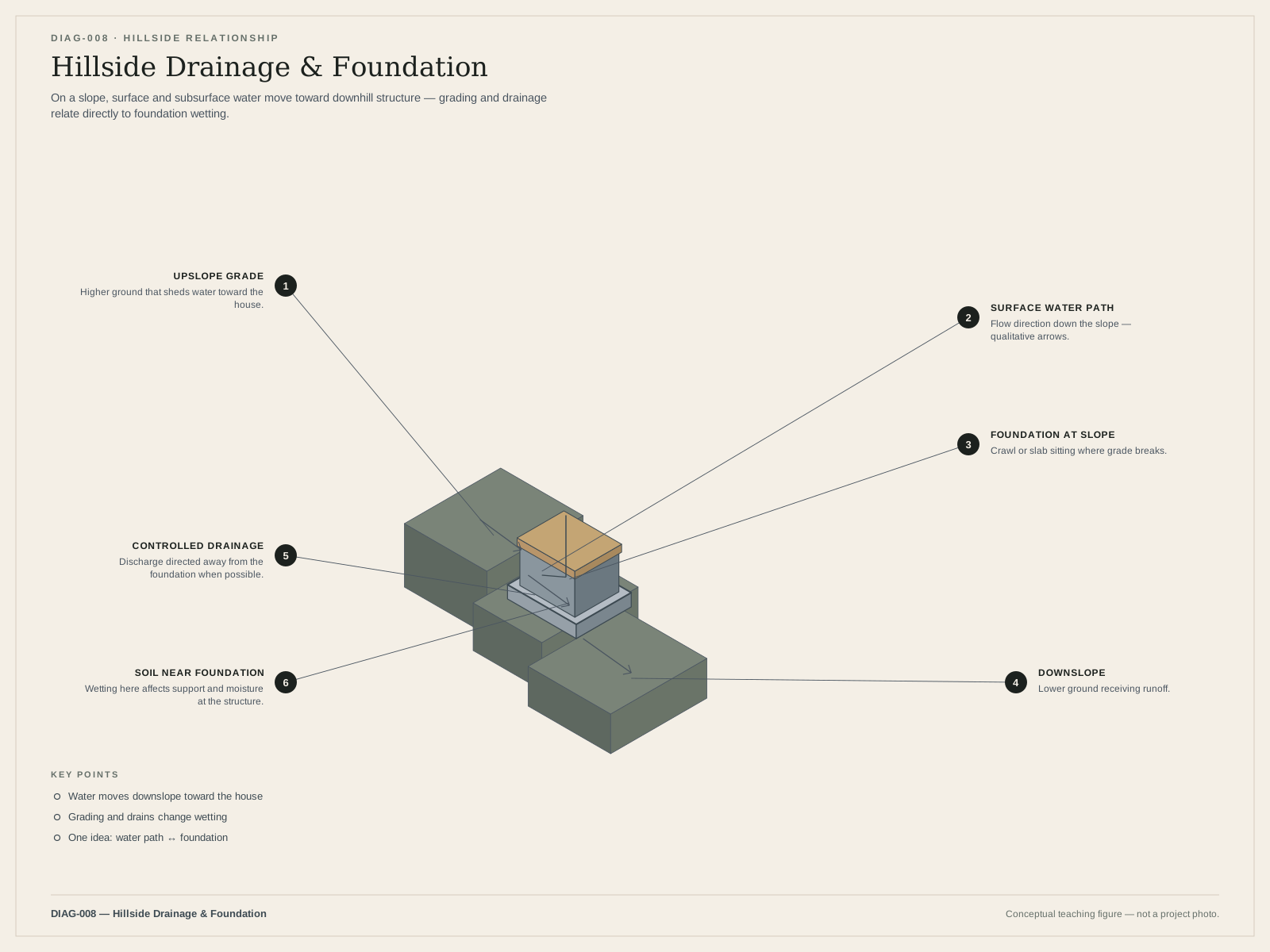
La Jolla’s identity is inseparable from its hillsides. Steep lots on and around Mount Soledad, canyon edges, and coastal bluff-adjacent parcels create foundation conditions that differ sharply from flat inland slabs. When floors settle downhill, cracks open along stepped foundations, or a retaining wall begins to lean, homeowners need a clear map of what kind of problem they may be facing—and who is qualified to investigate it.
LaJollaStructural.com helps you understand hillside foundation issues and connect with specialists serving La Jolla. We do not perform landslide stabilization, stamp geotechnical reports, or claim ownership of historic repair projects. This page is educational and commercially useful without impersonating a contractor or engineer.
What “hillside foundation repair” means
On slopes, “foundation repair” is rarely one product. Specialists and design professionals commonly separate:
- Structure foundation repair — restoring or underpinning footings, grade beams, piers, or stem walls that support the house
- Slope stabilization — measures that address ground movement (for example shear pins, buttresses, or tiebacks) when investigation shows instability
- Retaining wall repair — fixing or replacing walls that retain soil or support surcharges near the home
- Seismic retrofit of irregular hillside framing — distinct from flat-lot brace-and-bolt (FEMA P-1100 recognizes hillside dwellings as a separate class)
Mixing these categories in a sales pitch is a red flag. A sill-bolt package does not stabilize a bedding-plane landslide; a deep pier program does not automatically fix a clogged wall drain.
Warning signs on hillside properties
Seek evaluation when you observe:
- Progressive downhill floor slope or racked door frames
- Cracks that widen after storms or irrigation changes
- Separation between house and garage, decks, or stairs
- Leaning, bulging, or cracked retaining walls on the uphill or downhill side
- New cracks in grade beams or stepped footings
- Settlement concentrated at a downhill corner or wing
- Surface erosion, sinkholes, or sudden changes in yard grade
- Water emerging where it did not before (seeps, wet spots at toe of slope)
These signs do not prove a landslide is active under your parcel. They do justify professional assessment—often including both structural and geotechnical expertise.
Verified La Jolla hillside context
Community plan and ESL. The La Jolla Community Plan (Local Coastal Program) states that much of the community is characterized by steep, vegetated hillsides; hillsides of roughly 25% or greater slope are generally protected under City Environmentally Sensitive Lands (ESL) regulations. City-owned slopes of Mount Soledad and other hillside review areas are identified in the plan.
Steep hillside rules (SDMC §143.0142 context). Steep hillside regulations apply when natural gradient is at least 25% with ≥50 ft vertical elevation (or ≥200% with ≥10 ft vertical). Coastal Overlay rules further limit encroachment into mapped steep hillsides, viewsheds, and geologic hazard areas. Development permits (for example SDP/CDP/NDP as applicable) may be required in addition to Building Permits when ESL is involved—parcel-specific.
Geology (authoritative mapping, not your lot report). Mount Soledad Formation and other La Jolla Group units are mapped in the area (Kennedy & Tan 2008). Ardath Shale and related Eocene units are widely cited as slide-prone where slopes are steep or bedding is adverse; City Seismic Safety Study category schemes include Ardath favorable/unfavorable structure categories. Rose Canyon–Country Club–Mount Soledad fault strands transect the Mount Soledad area (CGS FER-265).
Documented local event (history, not your diagnosis). On October 3, 2007, a slope failure along Soledad Mountain Road in La Jolla destroyed homes and a roadway segment. Engineering literature (ASCE) describes reactivation of an ancient bedding-plane landslide after historic grading removed toe support; stabilization included large-diameter CIDH shear pins and reinforced soil. SDSU geology teaching materials note red-tagged homes and major public/private costs. Use this as documented hazard history—not as a claim that every Mount Soledad home shares that landslide mass, and not as panic copy.
City Seismic Safety Study. Landslide/potential slope instability categories and steep terrain categories help determine when a geotechnical report is required per Table 145.1803. Information Bulletin 515 describes geotech study expectations for development/grading permits; building-permit geotech rules appear in §145.1803. Check your parcel’s mapped category; maps are guides, not site investigations.
Problem mechanisms on slopes (general)
Recognized mechanisms include:
- Differential settlement of shallow footings on fill or variable rock/soil
- Lateral earth pressures on embedded walls and uphill stem walls
- Loss of toe support from erosion or grading
- Bedding-plane slide or reactivation of ancient landslide deposits
- Surficial sloughing and erosion undercutting
- Fill placed without adequate compaction or keying
- Utility trenches or irrigation wetting weak clay seams
- Seismic demand on irregular hillside framing
Poor drainage and irrigation are recognized contributors to slope and retaining-wall problems generally. Causation on a specific lot is always investigative. City Guidelines for Geotechnical Reports address retaining-wall drainage/subdrains, surface drainage that must not connect improperly to subdrains, and foundation recommendations on slopes.
Foundation types you may hear about
Educational only—selection is engineer/geotech-driven:
- Stepped continuous footings following grade
- Grade beams tying supports together
- Drilled piers / caissons socketed into competent material
- Combinations with uphill retaining stem walls
- Post-and-pier systems on slopes (access and seismic behavior vary)
This site does not prescribe products, diameters, depths, or brands.
Evaluation and diagnosis
A hillside evaluation often includes:
- Review of City Seismic Safety Study category and ESL/Coastal Overlay status
- Observation of structure distress patterns relative to slope direction
- Retaining wall condition and drainage function
- Surface drainage, irrigation, and erosion paths
- Geotechnical investigation when required or prudent (borings, lab testing, slope analysis as scoped by the geotech)
- Structural assessment of foundations and framing irregularities
- Permit-path screening: Building Permit, grading permit, ESL-related development permit, Coastal Development Permit, historic review if 45+ years
EBB limitation: CRMP Earthquake Brace + Bolt targets houses on level ground or a slight slope. Many steep Mount Soledad lots fall outside simple brace-and-bolt eligibility; hillside seismic/foundation work often needs custom engineering.
Related pages: retaining wall repair, foundation drainage, foundation settlement repair, and foundation underpinning.
Repair and stabilization concepts (not a sales menu)
After investigation, specialists may discuss combinations such as:
- Localized foundation underpinning or pier deepening where bearing is inadequate
- Grade-beam and stem-wall repair
- Retaining wall reconstruction with proper drainage blankets, filters, and outlets
- Slope stabilization elements when global stability is the controlling issue
- Surface and subsurface drainage corrections timed with structural work
- Engineered seismic strengthening appropriate to hillside geometry
Risk language matters. Engineered mitigation can reduce risk; it does not erase geology. Guarantees that “all slope movement will stop forever” are not credible.
Permitting stack on hillside lots
Depending on parcel and scope, you may encounter:
- City of San Diego Building Permit (SDMC §129.0202 for structural repair)
- Grading permit when earthwork thresholds are met
- Geotechnical investigation report (IB-515 / §145.1803 / IB-141 for fill or expansive soil where relevant)
- ESL-related development permits and possibly a Coastal Development Permit in Coastal Overlay
- Historic review for structures 45+ years old
Hillside sites frequently involve fill or adverse geology, so geotech is more common than on flat mesa lots. Repair-versus-remodel distinctions can change which overlays apply—ask DSD and your design team rather than assuming.
Process homeowners can follow
- Document symptoms, drainage changes, and recent grading/irrigation work
- Pull or view Seismic Safety Study and zoning/overlay information for the parcel
- Request evaluation through specialists serving La Jolla
- Engage geotechnical and structural professionals when investigation indicates need
- Define whether the controlling problem is structure support, wall drainage, or slope stability
- Permit, construct, and inspect—then maintain drains and surface drainage
Cost factors (no quotes)
Depth of foundations, access on steep grades, shoring, temporary relocation needs, geotech scope, ESL/coastal processing, historic review, and whether shear-pin or deep-foundation systems are required all drive cost. This site publishes no prices.
Drainage and irrigation: what homeowners can control
You cannot change Eocene bedding or mapped landslide deposits from a garden hose—but you can stop making wet clay seams worse. Practical homeowner checks that often appear in geotechnical guidance include:
- Keeping roof leaders and patio drains discharging away from the uphill face of foundations and retaining walls
- Avoiding heavy irrigation against stem walls and along the crest of slopes
- Watching for ponding on terraces after storms
- Not connecting surface drains improperly into wall subdrains in ways that flood the retained soil mass (City geotech guidelines emphasize correct drainage detailing)
- Noticing new seeps after plumbing leaks or landscaping projects
These steps are adjacent to engineered repair—they do not replace investigation when distress is already present. Coordinated foundation drainage work frequently travels with hillside foundation and retaining wall repair scopes.
How settlement on a slope is read differently than on a flat lot
On a flat lot, settlement patterns often point toward fill thickness, plumbing leaks, or expansive soil behavior under shallow footings. On a hillside, evaluators also ask:
- Is movement oriented downslope?
- Are distress signs worse after rain seasons?
- Do retaining walls and the house move together or independently?
- Was historic grading cut into the toe of a slope or placed fill on soft clay?
- Does the Seismic Safety Study category already flag landslide or steep-terrain concern for permitting?
Differential settlement repair concepts such as underpinning may still apply—see foundation settlement repair and foundation underpinning—but only after geotech has framed whether the ground itself is stable enough for a shallow underpinning approach.
Working sequence that protects both house and slope
A transparent specialist sequence often looks like:
- Stop aggravating factors where safe (irrigation cutback, diverting concentrated roof water)—without DIY excavation on steep slopes
- Investigate with structural observation plus geotech when indicated
- Stabilize ground or walls if global or wall stability controls
- Repair or deepen foundations once support conditions are understood
- Restore surface drainage and landscape so new work is not undone
- Document permits and as-builts for future buyers on hillside properties where disclosure questions are common
Skipping to decorative crack injection while a wall drain is failed—or bolting a sill while a toe is eroding—wastes money and can create a false sense of safety.
Rank-and-rent honesty on hillside marketing
Online ads sometimes imply that one crew “fixes Mount Soledad foundations” with a single proprietary pier. Credible practice is slower: parcel maps, borings when needed, engineered details, and City permits that may include ESL or coastal review. This site’s role is to help you ask better questions and connect with appropriate specialists—not to sell a miracle pier.
If someone claims your specific address is “on the 2007 landslide” without documents, ask for mapped evidence and a licensed geologist/geotech opinion. Historic events inform regional caution; they do not automatically describe every hillside parcel.
Disclosure and due diligence for buyers and sellers
Hillside foundation questions often surface during escrow. Buyers should treat Seismic Safety Study categories, ESL/Coastal overlays, and any prior permits for walls or underpinning as due-diligence items—not as substitutes for a current evaluation. Sellers benefit from documenting permitted repairs and drainage maintenance. This site does not provide real-estate advice; it helps both sides ask technical questions before committing to a structural path.
FAQs
What geologic hazard category is my parcel?
Check the City Seismic Safety Study map tiles and confirm with a design professional. Maps guide permit geotech requirements; they are not site reports.
Is my lot ESL / steep hillside / Coastal Overlay?
Many La Jolla hillside parcels are. Overlay status and whether work is repair-in-kind versus expansion change permit type—verify for your APN.
Do cracks mean landslide?
Not necessarily. Cracks can reflect foundation member distress, fill settlement, shrinkage, or deeper movement. Geotech + structural evaluation separates causes.
Will the City require a geotech report before foundation repair?
Often more likely on hillside or mapped hazard parcels than on flat lots—Table 145.1803, IB-515, and IB-141 rules apply as relevant. Your engineer/DSD path decides.
Is brace-and-bolt enough?
Often no on steep or irregular hillside dwellings. EBB targets level ground or slight slope; FEMA P-1100 treats hillside retrofit as distinct.
Who decides on shear pins or deep foundations?
Licensed geotechnical and structural professionals—not a website.
Next step
If your La Jolla hillside home shows settlement, wall distress, or drainage-related foundation symptoms, start with a grounded evaluation—not remote speculation.
Request an Evaluation