
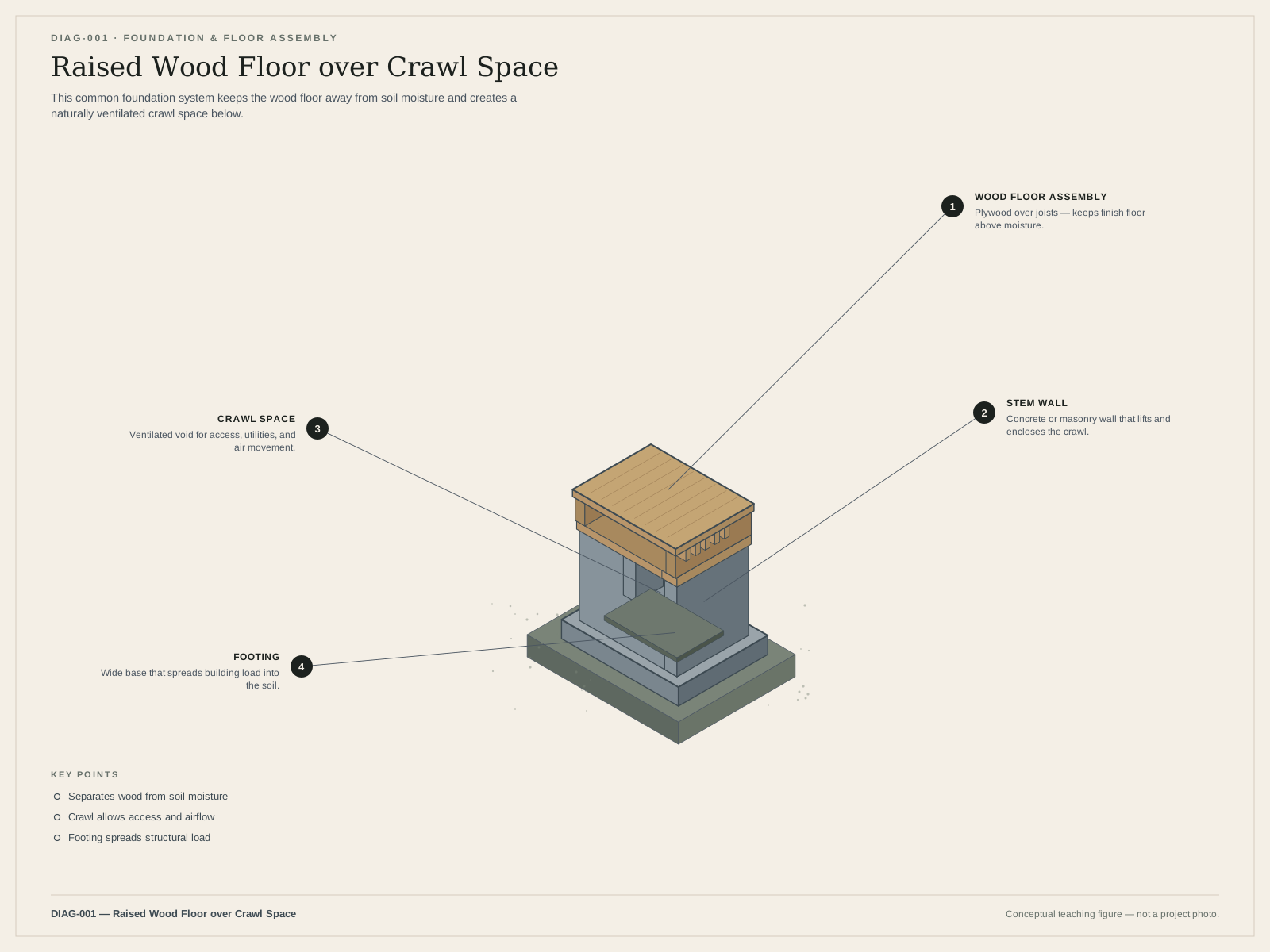
Structural repair means restoring or strengthening the parts of a building that carry gravity and lateral loads—foundations, framing, connections, and related site-retention elements. In La Jolla, homeowners often search this phrase after noticing cracks, sloping floors, garage soft-story cues, or a retaining wall that has begun to lean.
LaJollaStructural.com is a rank-and-rent resource: we help you understand the problem categories and connect with specialists serving La Jolla. We are not a licensed contractor, engineer of record, or local construction company. Work in ZIP 92037 is administered by the City of San Diego Development Services Department.
What “structural repair” covers (educational categories)
Think in systems—not product ads:
- Foundation and under-floor — raised/crawl-space stem walls and piers, settled or cracked slabs, footing distress
- Gravity framing — beams, girders, posts, joists, headers that have decayed, overloaded, or been cut
- Lateral system — shear walls, diaphragms, hold-downs, and connections that resist wind and earthquake forces; interfaces with seismic retrofit
- Soft, weak, or open-front conditions — for example living space over a garage opening (CEBC Appendix Chapter A4 context)
- Retaining walls and grade beams that retain soil or support structure footings
- Damage reconstruction after fire, water, or termite attack to structural members
A webpage cannot tell you which category applies. Visible symptoms are starting points for evaluation.
Warning signs and qualification criteria
Seek professional evaluation when you notice:
- Stair-step or widening cracks in foundation walls, plaster, or masonry
- Floors that slope, bounce, or separate from walls
- Doors and windows that stick seasonally or permanently out of square
- Sagging beams, cracked headers, or posts that look crushed or out of plumb
- Garage openings with living space above and little obvious bracing (soft-story cue—not automatic proof of failure)
- Retaining walls that lean, bulge, crack, or weep excessively
- New openings cut in load-bearing walls without documented engineering
- Post-event damage (earthquake, vehicle impact, water intrusion) to framing or foundation
Cosmetic hairline plaster cracks can be benign. Load-path problems can also look subtle at first. Preserve uncertainty until inspection.
Why La Jolla context matters
Jurisdiction. La Jolla parcels in 92037 follow City of San Diego rules. Under SDMC §129.0202, a Building Permit is generally required for erection, construction, enlargement, alteration, repair, or improvement of regulated structures unless exempt under §129.0203. The narrow similar-materials maintenance exemption in §129.0203(a)(17) (aggregate valuation ≤ $1,000, not affecting electrical/mechanical) does not cover most structural repairs.
Licensed design. SDMC §129.0206–§129.0207 address when plans must be prepared by a California-licensed architect or registered engineer; the Building Official may require licensed preparation even when state law is ambiguous.
Historic review. Permit projects involving structures 45 years or older, designated historic resources, or historic districts commonly trigger historic resource review (City DSD Building Permit guidance)—a timeline and documentation factor for many La Jolla homes.
Geology and geotech. Geotechnical investigation may be required based on Seismic Safety Study geologic hazard category and facility class (SDMC Table 145.1803). City Information Bulletin 141 addresses fill and expansive soil for typical low-rise residential foundations.
Coastal Overlay / Environmentally Sensitive Lands (ESL). Portions of La Jolla lie in the Coastal Overlay Zone and/or contain ESL such as steep hillsides and coastal bluffs. The La Jolla Community Plan notes extensive steep hillsides protected under ESL. Development on ESL can require additional development permits beyond a Building Permit (SDMC Chapter 14, Article 3, Division 1). Repair-in-kind versus new encroachment distinctions are fact-specific—do not assume a simple Building Permit is always enough, and do not assume every repair triggers ESL review.
Soft-story stance (verified). The City of San Diego has adopted CEBC Appendix Chapters A3 (cripple wall / sill anchorage) and A4 (soft/weak/open-front wood-frame) in its Existing Building Regulations. City materials describe Appendix A4 soft-story standards as voluntary mitigation, not a citywide mandatory soft-story retrofit ordinance like Los Angeles. Always re-check current DSD guidance before treating that status as permanent. Separate mandatory provisions exist for qualifying unreinforced masonry wall anchorage and parapet bracing—distinct from wood-frame soft-story programs.
Evaluation and diagnosis first
A trustworthy structural-repair path is diagnosis-first:
- Document symptoms with dates and photos
- Determine whether issues appear cosmetic, gravity-related, lateral, geotechnical, or mixed
- Bring in a California-licensed structural/civil engineer when load path, openings, or substantial alteration is involved
- Add a geotechnical engineer when mapped hazards, slopes, fill, retaining walls, or settlement patterns suggest soil/rock behavior
- Confirm permit path with City Development Services before construction
For evaluation-focused next steps, see structural inspection. Foundation-centered problems are detailed on foundation repair. Wall and slope retention issues continue on retaining wall repair.
Solution methods specialists may discuss
Educational—not a menu of services this site performs:
- Localized member repair or replacement (posts, beams, joists)
- Foundation repair, underpinning concepts, or stem-wall work after investigation
- Shear-wall or connection upgrades when lateral capacity is deficient
- Soft-story mitigation under engineer of record using Chapter A4 or project-specific design (voluntary in San Diego unless another permit trigger applies)
- Retaining-wall repair or replacement with drainage corrections
- Coordinated drainage and grading so water does not continue to undermine repairs
Existing Building Code note: Level 3 alterations with substantial structural alteration can require demonstration that the lateral system meets referenced CBC/CEBC provisions (San Diego Existing Building Code path—confirm current edition with DSD). Remodels that add openings or change occupancy can escalate scope beyond “patch the crack.”
Process overview
- Triage symptoms — what changed, how fast, and where
- Professional evaluation — inspection and, when needed, engineering/geotech
- Scope definition — repair vs strengthening vs slope/retention work
- Permitting — Building Permit; possibly grading, ESL-related development permits, Coastal Development Permit, and/or historic review
- Construction with inspections — City references IB-120 for inspection expectations on permitted work
- Documentation — keep plans, permits, and inspection cards for future sale or insurance questions
Cost factors (no prices invented)
Drivers typically include extent of damage, access, temporary shoring, engineering/geotech fees, permit and historic-review complexity, ESL/coastal overlays, and whether lateral upgrades are triggered. This site does not quote dollars, warranties, or insurance outcomes.
Verify any contractor’s CSLB license and that permits are pulled for your address through City of San Diego. Do not treat a website CTA as a credential.
Related services
How structural repair differs from cosmetic patching
Homeowners sometimes receive conflicting advice: paint over the crack, caulk the stem wall, or replace a door slab that sticks. Those steps can be appropriate after a structural cause is ruled out—or as temporary cosmetics while investigation proceeds. They are not substitutes for repairing a compromised post, an inadequately supported beam, a foundation that has lost bearing, or a lateral system weakened by new openings.
A useful distinction:
- Finish distress — paint cracks, minor drywall nail pops, seasonal hairline plaster movement with no progressive change
- Building movement indicators — progressive floor slope, racked openings, stepped foundation cracks, separated porches, leaning retaining walls
- Capacity or code-triggered work — repairs tied to damage plus upgrades required because a remodel decreases lateral capacity or constitutes a substantial structural alteration under the Existing Building Code
If movement is progressive—wider this year than last, doors that recently stopped latching, new separations at the garage—prioritize evaluation over finish work.
La Jolla property patterns that commonly drive structural scopes
Without inventing a census of foundation types, several verified local patterns shape what “structural repair” means here:
- Older wood-frame stock increases the odds of raised foundations, original sill details that predate modern anchorage, and 45-year historic review when permits are filed.
- Steep hillside and ESL-protected slopes (La Jolla Community Plan) mean some repairs intersect grading limits, viewshed/coastal rules, and geotechnical investigation requirements—especially near Mount Soledad and other mapped hillside review areas.
- Coastal Overlay parcels can add Coastal Development Permit questions when work enlarges footprints or encroaches into sensitive areas; pure repair-in-kind may follow a different path than expansion—parcel facts decide.
- Retaining walls and terraces are common on view lots; a leaning wall may be a drainage problem, an undersized wall, or a symptom of broader slope movement. See related coverage under retaining wall repair.
None of these patterns diagnose your address. They explain why La Jolla structural scopes often involve more than a flat inland subdivision patch.
When gravity repair and lateral strengthening travel together
Contractors and engineers sometimes separate “fix the damaged beam” from “upgrade the shear wall.” On paper that split is clean; on occupied houses the scopes often meet:
- Removing a bearing wall for an open plan can require a new header and a lateral redesign if the wall was a shear element
- Foundation underpinning may be paired with sill anchorage if the home also lacks Chapter A3-type connections
- Soft-story strengthening may reveal decayed posts or inadequate footings that must be corrected for the new frame to work
- Fire or termite reconstruction may rebuild members to current connection standards rather than matching deficient historic details
Ask for a single coordinated narrative from the design professional: what is damage repair, what is voluntary strengthening, and what is code-triggered upgrade. That clarity helps you compare proposals and avoid paying twice for conflicting approaches.
Working with specialists (rank-and-rent transparency)
Because this site is not the contractor or engineer:
- Use evaluations to clarify cause, urgency, and permit path
- Prefer written scopes that name City of San Diego permit types expected
- Confirm who is engineer of record, who pulls the permit, and who schedules inspections
- Verify CSLB license status yourself at the Contractors State License Board
- Treat “we can do it without a permit” claims for structural repair with skepticism given SDMC §129.0202
If foundation settlement appears primary, deepen reading on foundation repair. If the issue is a cracked or leaning site wall, continue to retaining wall repair. If you need an evaluation-focused overview before choosing a repair path, start with structural inspection.
FAQs
Is every crack structural?
No. Some cracks are finish-material movement. Others reflect settlement, overload, or lateral distress. Evaluation separates categories.
Do I need an engineer, a geotechnical engineer, or both?
Structural/civil engineers address the building’s load path. Geotechnical engineers address soil/rock support and slope behavior. Many La Jolla hillside or settlement cases need both.
Does San Diego require soft-story retrofit for all multi-family buildings?
As of City materials reviewed for this site’s research (2026), Appendix A4 is adopted as a voluntary mitigation standard. No LA-style citywide mandatory soft-story ordinance was found. Confirm current DSD status for your building type. Separate URM rules can be mandatory for qualifying masonry buildings.
Will repair trigger historic review?
Often if the structure is 45+ years old or otherwise historic-designated when a building permit is required.
Could remodel work force lateral upgrades?
Yes—substantial structural alteration, decreased lateral capacity (new openings), change of occupancy, or other Existing Building Code triggers can expand scope. Case-by-case with DSD and your engineer.
Next step
If you suspect a load-path, foundation, framing, or retention problem at a La Jolla property, start with evaluation—not a remote guess.
Discuss Your Structural Problem